


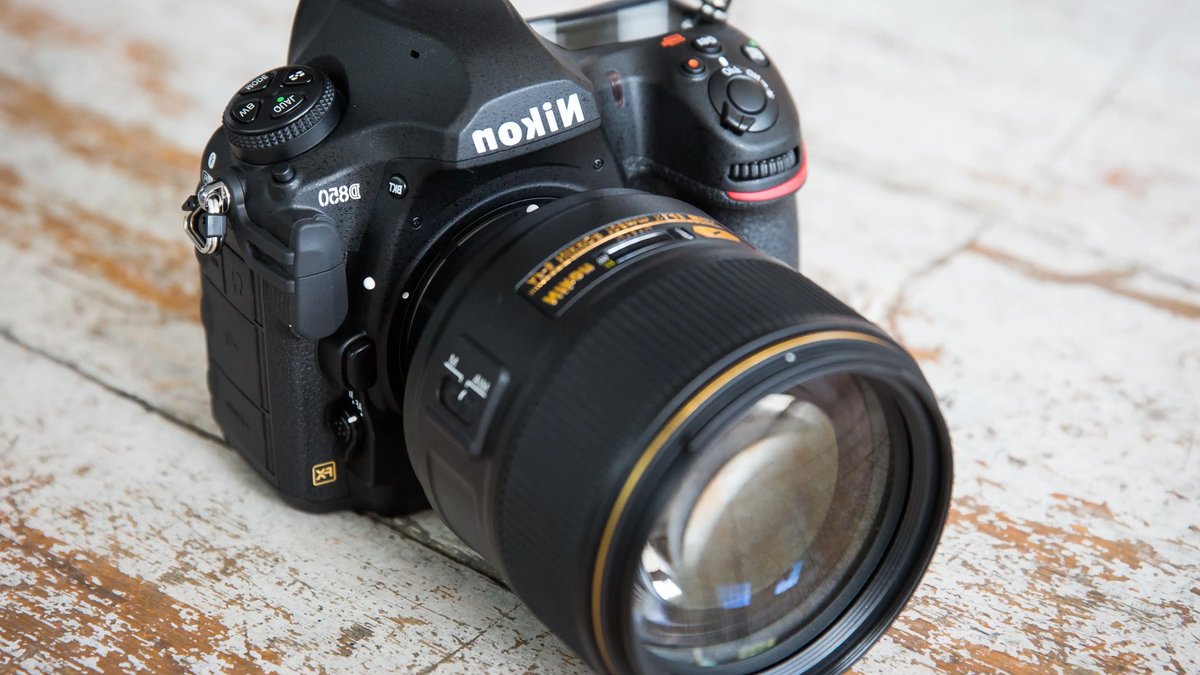
The Nikon D850 remains one of the most respected full-frame DSLRs ever made, even years after its release. Its combination of resolution, build quality, and versatility has kept it relevant in a market increasingly dominated by mirrorless cameras. While newer systems emphasize electronic viewfinders and hybrid autofocus, the D850’s optical design offers a direct, lag-free connection to the subject that many photographers find indispensable. The absence of a mirrorless-style blackout during continuous shooting further enhances its appeal for action and sports photography, where uninterrupted visibility is critical.
A camera that still stands out
The D850 features a 45.4-megapixel FX-format sensor, delivering sharp, detailed images that rival many modern cameras. This capability is particularly valuable for setting and studio photographers who require fine gradations in highlights and shadows. The camera ensures rapid data handling, enabling continuous shooting at up to 7 frames per second—an impressive feat for a high-resolution DSLR. When paired with the optional MB-D18 battery grip, this rate increases to 9 frames per second, making the D850 a viable option for wildlife and fast-moving subjects.
Its bright optical viewfinder and robust magnesium alloy body make it a favorite among photographers who prefer the tactile feel of a DSLR. The viewfinder provides 100% frame coverage with a 0.75x magnification, offering a large, clear image that simplifies composition and manual focusing. The body’s weather-sealing protects against dust and moisture, allowing photographers to work confidently in harsh environments. The camera’s dual card slots—one for XQD and another for SD—provide flexibility in storage and backup options, a feature that professionals rely on to prevent data loss during critical shoots.
The camera also supports 4K video recording at 30 frames per second, though its strengths lie more in still photography. The D850 can capture 4K UHD footage using the full width of its sensor, avoiding the crop factor that limits some competing models. While the camera lacks some of the advanced video features found in dedicated mirrorless hybrids, its ability to produce clean, detailed footage remains highly regarded.
Performance-wise, the D850 handles low-light situations well. Its autofocus system, while not as advanced as newer mirrorless models, remains reliable for most shooting scenarios. The 153-point AF system covers a wide area of the frame and performs well in both single-point and dynamic-area modes. The camera’s 3D-tracking capability provides dependable focus acquisition for moving subjects.
The camera’s battery life is another highlight—capable of lasting through long shoots without frequent recharging. A single EN-EL15a battery can power the D850 for approximately 1,840 shots per charge, a figure that surpasses many mirrorless alternatives. This endurance is particularly advantageous for travel and event photographers who may not have opportunities to recharge during extended assignments. The optional MB-D18 grip not only extends shooting speed but also allows the use of a second battery, effectively doubling the camera’s operational time.
Related: Why a Photo Booth Is the Secret to a Successful Corporate Event
Nikon’s decision to stick with the F-mount means the D850 is compatible with a vast ecosystem of lenses, including many affordable third-party options. The F-mount’s decades-long history has resulted in a diverse selection of optics, from ultra-wide primes to super-telephoto zooms, many of which are available at competitive prices. This compatibility also extends to older manual-focus lenses, which can be adapted for use on the D850 with full metering and aperture control. The camera’s built-in focus peaking and electronic rangefinder assist in achieving precise manual focus, making it a versatile tool for photographers who appreciate vintage glass. Additionally, the D850 supports Nikon’s SnapBridge technology, enabling wireless image transfer to mobile devices for quick sharing or remote control via Bluetooth and Wi-Fi.
For those considering a purchase, new units are still available, though stock is limited. In the U.S., Amazon lists the D850 body for $1,996.95. In the U.K., used models with a Nikon-backed guarantee can be found for around £1,566. The camera’s enduring popularity has also created a robust secondhand market, where well-maintained units retain significant value. Potential buyers should verify shutter actuations and overall condition, as the D850’s mechanical components, while durable, are subject to wear over time.
Why it still matters
The D850 arrived at a time when DSLRs were still the dominant choice for serious photographers. Its high-resolution sensor and rugged construction set a benchmark that few cameras of its era could match. The camera’s ability to produce large, detailed files without sacrificing speed or reliability made it a favorite among professionals in fields ranging from commercial advertising to fine-art photography. Its 45.4-megapixel sensor, combined with the absence of an anti-aliasing filter, delivers images with exceptional clarity and micro-contrast, allowing for extensive cropping and high-quality prints at large sizes. This level of detail has made the D850 a preferred tool for photographers who require maximum flexibility in post-processing.
While mirrorless systems have since taken the lead in innovation, the D850’s optical viewfinder and ergonomic design offer a shooting experience that many photographers still prefer. The camera’s deep grip and well-placed controls allow for comfortable handling during extended use, reducing fatigue during long sessions. Its physical dials and buttons provide direct access to key settings, enabling quick adjustments without handling menus. The optical viewfinder’s lack of lag or electronic artifacts ensures a natural, unmediated view of the scene, which many photographers find more intuitive than electronic alternatives. Additionally, the D850’s lack of a power-hungry electronic viewfinder contributes to its impressive battery life, a practical advantage in the field.
Its longevity is a reminder that technological progress doesn’t always render older models obsolete. The D850’s ability to produce professional-grade results without relying on the latest autofocus or computational features makes it a compelling option for those who prioritize image quality and handling over cutting-edge specs. The camera’s mechanical shutter, rated for 200,000 actuations, ensures long-term reliability, while its compatibility with a wide range of accessories—from wireless remotes to external flashes—enhances its adaptability. The D850’s continued relevance is also reflected in its strong resale value, as demand for high-quality DSLRs persists among photographers who value the system’s proven performance and lens ecosystem.
Nikon’s slowdown in new camera releases has kept the D850 in the conversation longer than expected. For photographers who don’t need the latest mirrorless advancements, it remains a dependable workhorse—one that continues to earn praise years after its debut. The camera’s enduring appeal lies in its ability to deliver consistent, high-quality results across a wide range of photographic disciplines. Whether used for portraiture, setting, or documentary work, the D850’s combination of resolution, durability, and usability ensures it remains a relevant and valuable tool in an era of rapid technological change.

