


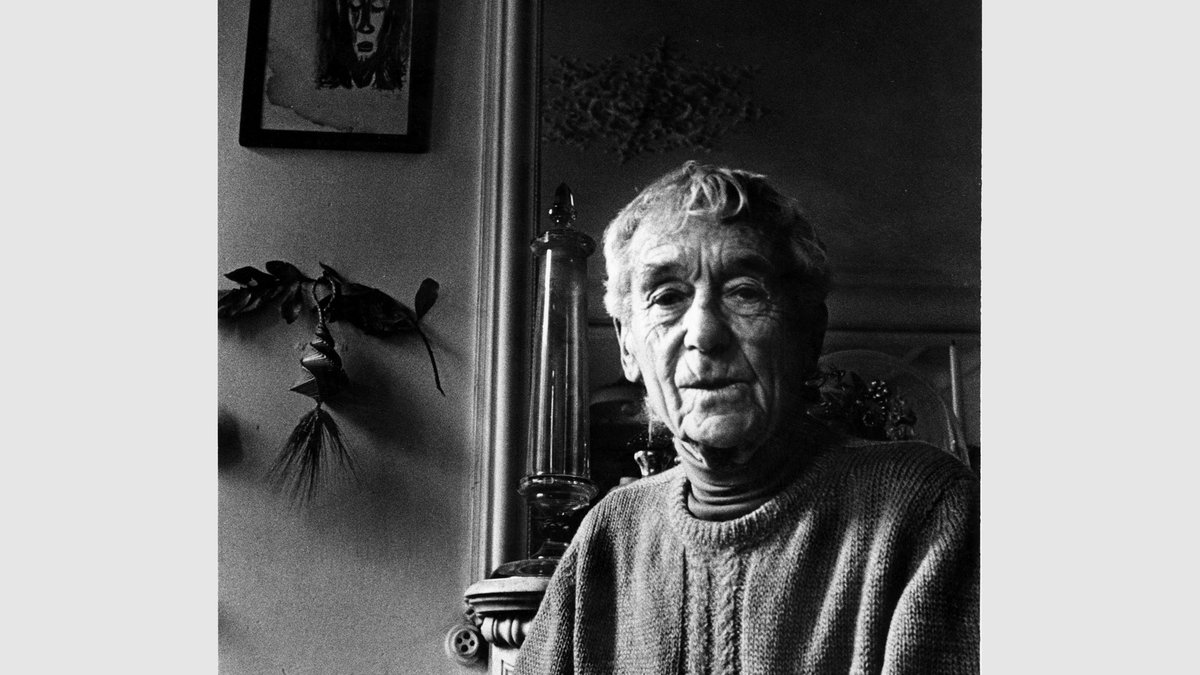
Jacques Henri Lartigue first handled a camera at age six, climbing onto a stool to operate a plate camera his father had given him. By eight, he was already producing three-dimensional images using a Gaumont Stereo-Spido—an early experiment that foreshadowed the spontaneity defining his later career. His work emerged during the Belle Époque, a period when most photographs were stiff, posed portraits. Unlike others, Lartigue had unfiltered access to a camera and the freedom to capture whatever caught his eye.
The 1974 interview, part of a four-year effort to document 20th-century photography pioneers, revealed Lartigue at 80, accompanied by his wife, Florette. Though the meeting was brief, he disclosed a trove of unpublished photographs—some darker than the cheerful, light-filled images he had shared publicly.
Lartigue’s early photography was accidental brilliance. His father, a businessman, used a bulky camera for leisure, and the young boy would peer through the ground-glass screen, captivated. By six, he was taking his own pictures, counting to three after removing the lens cap and replacing it before the exposure finished. The process was awkward, but it matched his curiosity. He did not become aware of other photographers until age 50, though he enjoyed looking at photographs in Vogue and Harper’s Bazaar.
His photographic style differed sharply from his painting. “I have two pairs of eyes, one to paint and one to take photographs,” he said. “There is little relationship between the two.”
What distinguished Lartigue was not just his early start but his refusal to follow rules. While other photographers adhered to established techniques, he framed life as it unfolded, a sister mid-dance, a friend mid-leap, a car racing down a Parisian street. His images were more than snapshots; they were early examples of what would later become known as street photography. Decades before Instagram popularized the concept, Lartigue had been documenting life’s spontaneity since 1900.
Breaking color barriers in 1960s New York
In his teens, he began experimenting with color photography, a technically challenging process in an era dominated by black-and-white. His bold, bright results caught the attention of John Szarkowski, then curator at the Museum of Modern Art in New York. In 1963, at age 70, Szarkowski organized a retrospective that propelled Lartigue into the canon of modern photography. The exhibition proved that an obscure artist could reshape an entire genre.
Lartigue’s success stemmed from his uncompromising approach. He photographed for personal satisfaction, not external validation. “I am a bit of an egotist, and I make pictures for my own pleasure and not necessarily to show them,” he explained. “I never work to order.”
His carefree attitude was genuine, not performative. When asked if he resented being better known as a photographer than a painter, he responded, “For forty years I was known as a painter. Since the war I have been known as a photographer, each one in its turn.” The shift held no weight for him; what mattered was creation, not categorization.
Yet beneath the surface, his work held complexity. He acknowledged thousands of unpublished images, some darker, some unfinished, kept private by choice.
How a hobbyist reshaped modern photography
Lartigue’s legacy transcends his images. His life demonstrates how photography can evolve from a hobby into an art form without losing its spontaneity. In an age of ubiquitous cameras, his story shows that the best photography often begins with curiosity rather than technique. He did not follow trends; he set them.
Today, his color photographs, once a daring experiment, are featured in exhibitions like Jacques Henri Lartigue: Life in Colour, running until October 4. The show celebrates his lifelong play with light, motion, and color, proving that even at 80, he saw the world as a child would: with unfiltered wonder and no regard for rules.
His final words in the 1974 interview were direct: “Fortunately, I am still a child. It seems to me that human beings tend to get more and more ‘down’ as they get older. One must try always to remain childlike, gay, happy.”

